Second Brain
A Private Second Brain: How Local Knowledge Graph Memory Works
July 8, 2026 · 7 min read
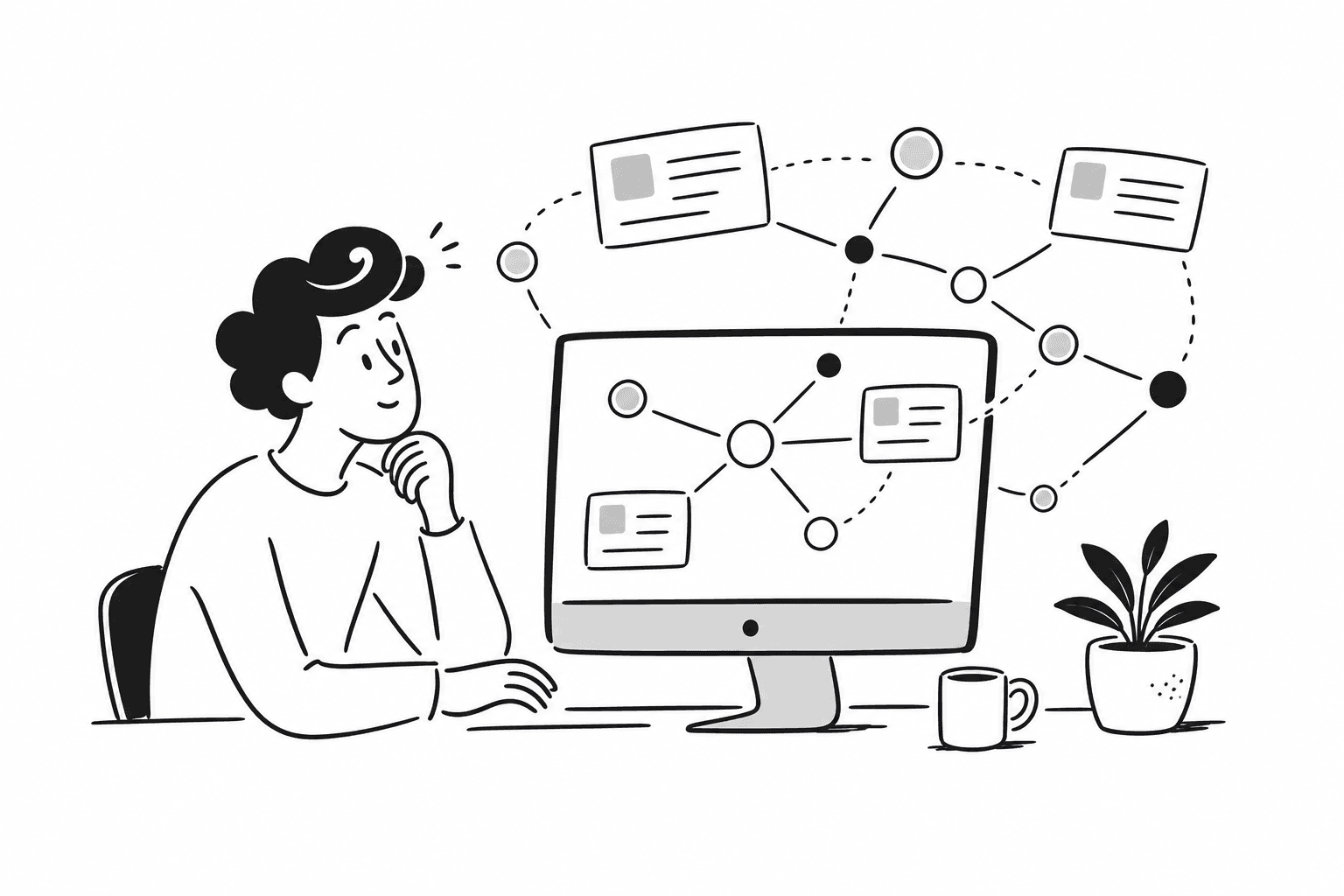
A second brain is only useful if you can trust it. VeloxWaves treats memory as local product infrastructure, not a cloud archive of everything you say.
Each dictation can become part of a private knowledge graph on your machine. The app stores transcript nodes, entities, relationships, and embeddings locally so you can search and reconnect ideas later.
From transcript to memory
Most note systems stop at text. VeloxWaves uses the text as a starting point. A local memory layer can identify meaningful people, tools, projects, concepts, and places, then connect them back to the source dictation.
The result is not just a chronological history. It is a searchable map of what you said and how ideas relate to each other.
Why local embeddings matter
Semantic search depends on embeddings: numeric representations that make related ideas easier to find even when you use different words. VeloxWaves computes and stores those embeddings locally.
That means searches like "client launch timing" can find relevant notes even if the original phrase was "revised release date," without uploading the memory database for remote indexing.
Project memory without losing context
Work rarely lives in one clean folder. VeloxWaves can scope memory to projects while still preserving broader context. That helps a current project rank first without making older or unscoped memory invisible.
Privacy is the product constraint
A private second brain should not ask you to trade memory for surveillance. VeloxWaves stores transcripts, graph data, and embeddings on your device by default, with account and billing handled separately from your actual memory content.
Build a searchable memory from your voice without uploading your transcript archive.
See VeloxWaves features