Healthcare vision
Shared Clinical Memory for Long-Term Care: When Every Shift Needs the Full Story
July 10, 2026 · 10 min read
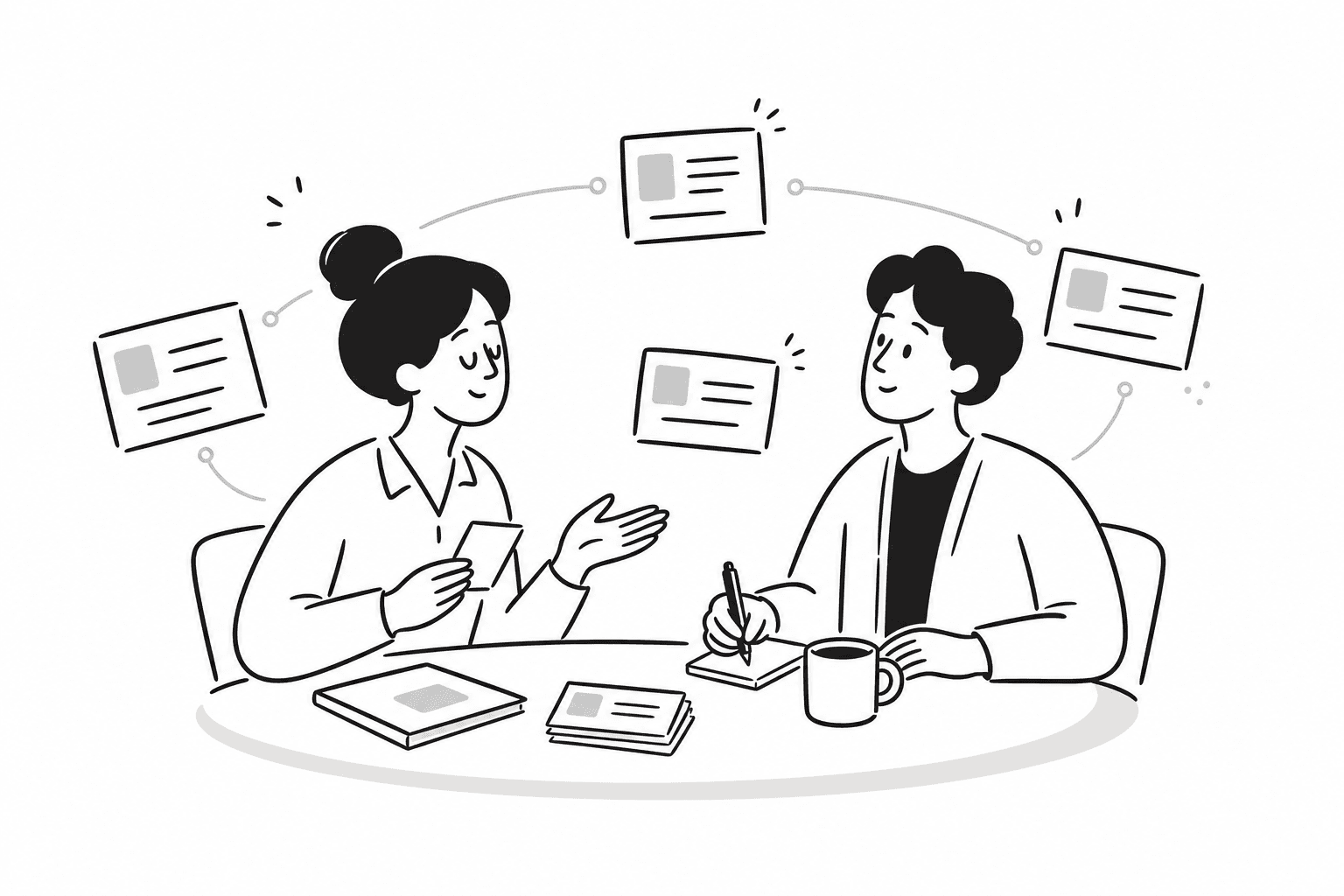
Long-term care does not pause when one shift ends. A resident may sleep poorly overnight, refuse breakfast, need repeated redirection in the morning, walk more steadily after lunch, and show a subtle change in mood by evening. Each observation may be known by a different person. The care team needs the full story, but the story is often spread across notes, forms, dashboards, verbal reports, and staff memory.
This is the promise behind a shared clinical memory: help authorized staff capture what they observed, preserve where every fact came from, and carry relevant context into the next shift. It can be described as an organizational second brain, but the metaphor has limits. A clinical memory cannot be an informal pool where everyone sees everything, and it cannot become a second, competing medical record. It must be governed, attributable, and connected to the system of record.
The real problem is continuity, not just documentation
Long-term-care documentation has several jobs at once. It records care delivered. It helps the next worker understand what changed. It supports escalation and follow-up. It gives nurses, physicians, therapists, social workers, and managers a history they can inspect. It must also respect each resident's privacy and dignity, including residents with dementia, cognitive disabilities, or behavioral-support needs.
A note can be complete as a record and still be difficult to use during a busy handoff. An incoming worker may need to know what changed since the last shift, whether a concern was already escalated, what intervention was tried, how the resident responded, and what remains open. Searching through every entry is different from receiving a concise view with links back to the signed source notes.
The Agency for Healthcare Research and Quality describes a shared mental model as a common understanding of the relevant facts, relationships, responsibilities, and plan of care. AHRQ's handoff guidance also notes that electronic handoffs are most effective when reinforced by direct communication. The goal is therefore not to automate away the conversation. It is to help the people having that conversation arrive with the same reliable context.
A fictional shift-to-shift example
Consider a fictional composite resident named Elena. During an afternoon shift, Elena becomes distressed in a noisy common area. A care worker moves with her to a quieter space, offers water, and observes that she settles after several minutes. Later, the worker records the event. The example is fictional, but the workflow illustrates what responsible shared clinical memory could look like.
Step 1
Capture the observation
A care worker dictates a factual update near the point of care: what happened, when it happened, what intervention was attempted, and how the resident responded.
Step 2
Draft the right document
The system prepares a structured progress, behavior, or incident-note draft. It does not silently turn an observation into a diagnosis or treatment recommendation.
Step 3
Review and take responsibility
The worker checks names, times, clinical details, and wording before signing. Human review is part of the workflow, not a disclaimer added after it.
Step 4
Write to the authorized record
The approved note is filed in the organization's authorized EHR or care-management system, preserving authorship, timestamps, and the original source.
Step 5
Prepare the next shift
Authorized incoming staff receive a source-linked view of recent changes, unresolved follow-up, and items that require acknowledgement, not an untraceable AI summary.
Step 6
Surface patterns for review
Over time, the system can help staff find related observations about sleep, appetite, mobility, behavior, or response to interventions. Clinicians decide what those patterns mean.
The important part is the chain of responsibility. Voice makes capture faster. Structure makes the draft easier to review. Provenance makes the result inspectable. The EHR preserves the official record. A source-linked handoff view helps the next team orient itself. None of those steps gives an AI authority to diagnose Elena, change her care plan, or decide that a trend is clinically meaningful.
Existing products prove the need is real
This is not an untouched category. Long-term-care EHR platforms already help teams document resident activity and make records accessible. PointClickCare's Point of Care product supports documentation of activities of daily living, vitals, and other resident information near the point of care. Its Practitioner Engagement offering includes chart access and note dictation. MatrixCare likewise offers connected documentation workflows for skilled nursing and senior living.
More specialized products are moving closer to the exact moment of documentation. CareTrace markets bedside dictation for shift notes and incident reports that are written into an existing EHR. ShiftCare supports progress and incident notes tied to a shift and can expose approved notes to other assigned staff. Notive focuses on spoken aged-care handover notes that staff review before finalizing. These products validate the demand for faster capture, structured notes, and clearer shift continuity.
A second group focuses on ambient clinical documentation. Microsoft Dragon Copilot and Abridge turn clinical conversations into draft documentation for professional review. In dentistry, Dentrix and Denti.AI demonstrate demand for hands-free charting, periodontal measurements, and structured clinical notes tied to an existing patient chart. The market lesson is not that one more generic recorder is needed. The opportunity is to connect reviewed observations across time without losing provenance, access controls, or the boundary of the official record.
Where a privacy-conscious memory layer could help
A useful memory layer would not copy every chart into an unrestricted AI database. It would retrieve only the organization-approved context needed for a particular worker, resident, and task. Local processing could reduce the exposure created by sending raw voice and draft content through additional hosted transcription services. Shared access would still require controlled organizational infrastructure, identity, permissions, auditability, and integration with the authorized record system.
The most valuable output may be a question answered with evidence: What changed overnight? Which behavior-related observations were recorded this week? Was the nurse notified? Which follow-up remains unacknowledged? Each answer should point back to signed notes rather than asking staff to trust a fluent summary. A memory interface should make verification easier, not make uncertainty invisible.
Longer-term retrieval could also help a qualified professional review whether similar observations recur around particular times, environments, activities, or interventions. That is a way to find relevant records, not an automated clinical conclusion. Patterns can be incomplete, documentation practices can change, and the absence of a note does not prove the absence of an event.
The same principle appears in dental practices and hospitals
In a dental practice, voice capture can help a dentist or hygienist create a reviewed SOAP note, record chairside findings, and prepare for a later visit. A future memory layer could retrieve relevant, approved context from the practice management system before the appointment. The patient chart would remain authoritative, and dental-specific structured charting would still require purpose-built integration rather than generic text storage.
In a small hospital, the potential value is source-linked handoff preparation across nursing and clinical teams. The governance burden is also substantially higher: more roles, more systems, more urgent events, and more complex interoperability requirements. Any memory layer would need to fit existing clinical communication practices instead of creating a parallel channel that staff must remember to check.
What responsible shared clinical memory requires
- Role-based, least-privilege access so each worker sees only the residents and information appropriate to their role.
- Strict resident separation, with no accidental mixing of one person's observations into another person's context.
- Authorship, timestamps, source links, version history, corrections, addenda, acknowledgement, and a reviewable audit trail.
- Organization-defined retention, deletion, escalation, and incident-reporting policies.
- Integration with the authorized EHR or practice-management system, which remains the official patient or resident record.
- Human verification and direct communication whenever a handoff is safety-critical or a resident's condition changes.
It also requires humility about what the product is. Shared clinical memory should not make autonomous diagnoses, choose treatments, replace professional judgment, or advertise legal compliance based only on technical architecture. Healthcare organizations must assess their own workflows, contracts, jurisdictions, and privacy and security obligations.
From private memory to governed continuity
VeloxWaves began with a simple privacy boundary: capture speech, transcribe it locally, and keep personal memory on the device. Extending that idea into care organizations would require a different level of product discipline. Sharing would have to be explicit and role-appropriate. Every generated statement would need a source. Every approved note would need an author. Every correction and acknowledgement would need to remain visible.
If those foundations are respected, voice capture and searchable context could help care teams spend less effort reconstructing what happened and more time discussing what matters now. The aspiration is not a machine that remembers on behalf of caregivers. It is a governed system that helps caregivers carry verified context forward together.
Sources and market context
- AHRQ: shared mental models and situation awareness
- AHRQ: clinical handoff guidance
- PointClickCare: point-of-care documentation
- MatrixCare: connected clinical documentation
- CareTrace: long-term-care voice documentation
- ShiftCare: progress and incident notes
- Notive: spoken aged-care handover notes
- Microsoft: Dragon Copilot clinical documentation
- Abridge: ambient clinical documentation
- Dentrix: dental charting and clinical notes
- Denti.AI: dental scribe and voice charting
Help shape the workflow
We are interested in how long-term-care teams document observations, prepare handoffs, and verify follow-up today. If you operate a nursing home, assisted-living community, or residential-care program, share your workflow with us. This is product research, not an announcement that multi-user clinical memory is currently part of VeloxWaves.